
bruce givner
While working as an intern, Givner remained in the Democratic National Committee's Watergate offices until just after midnight...
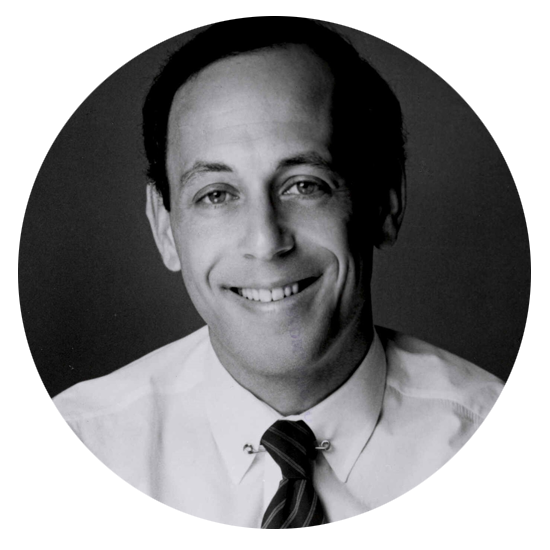
Bruce Givner was an intern on the 6th floor of the Watergate building the night of the famous break-in. While others left the DNC offices at roughly 6 p.m., Givner stayed until 12:05 a.m. the following morning availing himself of the DNC’s free WATS line, where he called friends and family all evening. As such, Givner foiled the plans of the Watergate burglars whose goal was to break-in around 10 p.m. Instead, they had to wait until Givner turned off the lights at the midnight hour. Had there been no interruption of their plans there never would have been a Watergate! His presence substantially delayed the break-in and indirectly led to the eventual arrests of the burglars.
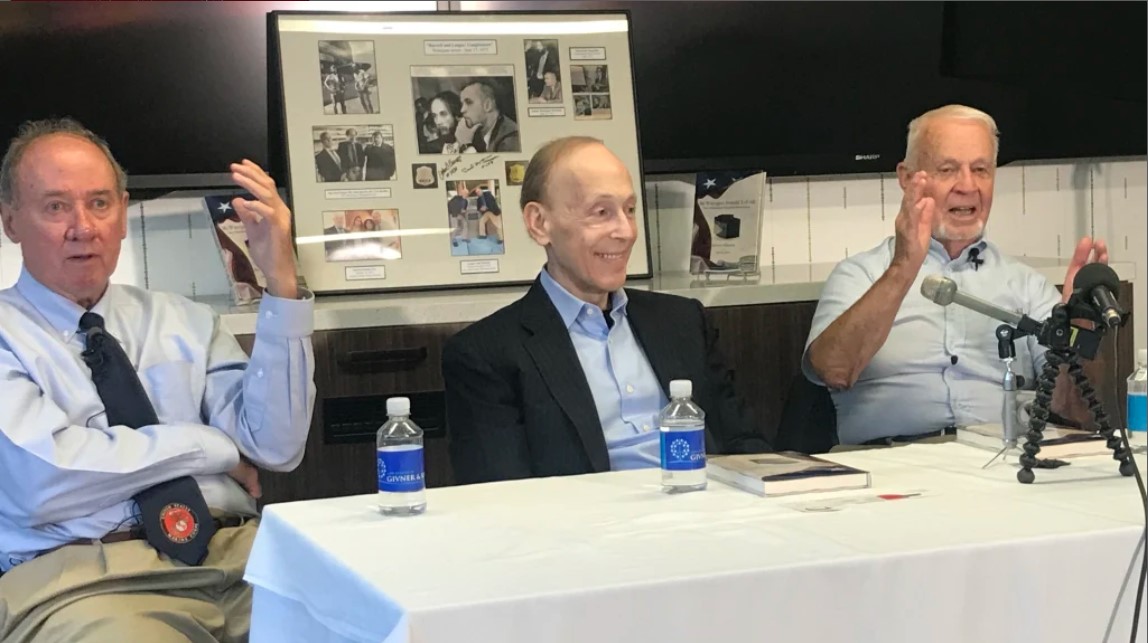
Bruce Givner, Paul Leeper and John Barrett answer questions during a press conference announcing the release of Givner’s new book, “MY WATERGATE SCANDAL TELL-ALL: How I Unwittingly Caused This Historic Event” in the Watergate office building in Washington, D.C. on June 10, 2019.
My Watergate Scandal Tell-All
In 2019 Givner released a book titled MY WATERGATE SCANDAL TELL-ALL: How I Unwittingly Caused This Historic Event recalling and detailing his experiences and life before and during the Watergate events. He held a press conference at the former DNC headquarters (now SAGE publishing) along with Watergate arresting officers, Paul Leeper and John Barrett. The three took media on a tour of the 6th floor of the Watergate describing each moment of Givner’s late stay there and the officers’ blow-by-blow description of the arrest.
Bruce Givner is a tax attorney in West Los Angeles. He received a B.A in History (graduating cum laude) from UCLA in 1973, a J.D. in 1976 from Columbia University Law School, and an LL.M. in Taxation from New York University’s Graduate Law School in 1977. Givner has been favorably cited by both the U.S. Tax Court and the California Court of Appeals. He has served as an adjunct professor at Golden Gate University and the University of San Diego tax law programs. Givner has had more than 100 articles published in professional journals. Givner has earned the highest rating possible since 1987 (5.0) an AV coveted distinction in the Martindale-Hubble Registry. He has been deemed a ‘Super Lawyer’ by his peers since 2011. Givner represents celebrities and high-net worth real estate families. Givner is also featured in Wikipedia with regard to his role in the Watergate event.
Givner was a DNC intern who worked late at the Watergate Office Complex on June 16, 1972. He was in the Democratic National Committee office, the target of the burglars. But because he didn’t go home, their whole plan was delayed and they were caught. Givner was a UCLA student in 1972. The former DNC offices are now home to SAGE Publishing. (Photo by Pete Marovich, Contributing Photographer
Early life

Givner was born and raised in Lorain, Ohio. Givner’s father, Eugene, was diagnosed with multiple sclerosis when Givner was eight years old. Givner’s father was forced out of the family business—Givner’s Luggage and Jewelry, a general store of sorts in Lorain that sold luggage, jewelry, and the engraving of it, as well as men’s clothing. Due to his illness, Eugene Givner was restricted to a wheelchair and was told he would have to move his family to a less humid climate. The family chose to move to Encino, California, after finding a wheelchair-friendly home in that town. Givner’s mother, Sonia Ann (“Sunny”) worked as a realtor (and sometimes in the Givner store’s jewelry department).
Education
Givner attended the following schools:
- Washington Elementary School (1956 to 1963)
- Hawthorne Junior High (1963 to 1964)
- Lorain Admiral King High School, Lorain, Ohio (1965 to 1969)
- University of California, Los Angeles, CA (1973); B.A. – Major: History
- Columbia Law School, New York, New York, (1976); J.D.
- New York University School of Law, New York, New York, (1977); LL.M. (Tax)
The day after Givner graduated from Admiral King High School in Ohio, he flew to Los Angeles and moved into Sproul Hall at UCLA. By the end of 1971, his sophomore year, he became involved in student government. The faculty assigned him to a group that Rick Tuttle was in, an original freedom rider with Martin Luther King, who later became treasurer of the city of L.A. Sheila Kuehl, an L.A. County Commissioner, was also a part of that group. At the end of his junior year at UCLA, Givner entered the Summer Internship Program which placed students in various government offices in Los Angeles, Sacramento, and Washington, D.C.. Givner landed an internship at the Democratic National Committee, not the most coveted position; those who were lucky were given ones with members of Congress.
Watergate

Givner played a role in the FBI’s investigation of the Watergate scandal. He was featured in Joseph Rodota’s book The Watergate: Inside America’s Most Infamous Address. Givner is also cited in many articles such as Harper’s January 1980 feature story: “The McCord File” by Jim Hougan. He also was the only subject in Columbia Law School News’ “If Not for Him, Nixon Might Still Be President” by Jim Shaw, referring to Givner as the person “if not for…”. He also has been written about in a book by Roger Stone and Mike Colapietro titled Nixon’s Secrets: The Rise, Fall, and Untold Truth about the President, Watergate, and the Pardon, and White House Call Girl: The Real Story written by Phil Stanford.
Givner was a 21-year-old intern working at the DNC offices on the sixth floor of the Watergate office complex when his prolonged stay on that floor the night of June 16, 1972, precluded the group of “bandits” from entering the building to correct their earlier wiretap work. The criminals were set up across the street in a suite above the Howard Johnson’s, while they waited for the lights to go out in the offices on the sixth floor at the DNC offices. Though Givner finished his intern duties around 7:30 p.m., he stayed to use a WATS line to make “about 20” free long-distance calls to friends and family, both in Los Angeles and Ohio. Sometime during the middle of those calls, Givner needed to use the restroom. Realizing he could not re-enter the suites when using the bathroom in the hallway because he had no key to re-enter, Givner stepped out onto the balcony and relieved himself in a cement planter. (The Watergate burglars likely witnessed that event through binoculars as they lay in wait for the right time to make their move, which they finally did less than an hour after Givner left the building shortly after midnight.) That was long after the burglars had hoped to get in.
After his phone calls that evening, Givner finally turned off the lights on Saturday, June 17, 1972, at 12:05 a.m., he told numerous reporters over the years. He then bolted down the stairwell, where he began chatting in the lobby with Frank Wills, the security guard on duty at midnight at the Watergate. After some friendly small talk, Wills and Givner headed across the street to the Howard Johnson’s restaurant for cheeseburgers, fries, and milkshakes. Wills began to follow up with his supervisor’s supervisor (he couldn’t reach his own)—the person to whom he reported the tape on the level two basement door before he left for the Howard Johnson’s. The tape was still there which prevented the door from locking. Shortly after reconnecting with his supervisor’s supervisor, Wills called police, who arrived within minutes. The burglars had sneaked in, and arrests were quickly made.
When Givner returned to his office at the DNC the following day – Saturday afternoon, around 3 p.m. – the sixth floor was swarming with police, FBI and other authorities. Givner let them know he had not left the building until shortly after midnight. That critical piece of information was pivotal to the investigation.
On November 10, 1974, The New York Times Sunday Magazine published an article by Sol Stern about the Watergate break-in, “A Watergate Footnote,” wherein Stern refers to Givner as “the mystery man” in the Watergate event. Givner wrote to the Times explaining who he was and downplaying any participation in the critical and historical event. The Times published his letter. Givner also was interviewed by Bob Fink, a researcher for The Washington Post, who had been hired by Woodward and Bernstein to work on their book, All the President’s Men. Fink confronted Givner, at first, strongly suggesting that Givner may have been a part of the botched event, a plant, but shortly after that conversation, Fink was convinced Givner had not played a role in the crime.
Wills was lauded as the hero who alerted police of the break-in, though later, Givner was credited as having provided critical information. Givner was not only questioned by the D.C. police and the FBI, but in October 1973 he also was interviewed by Senator Fred Thompson, who was the minority counsel to the Senate Select Committee on Presidential Campaign Activities. Givner was credited with having stopped the McCord group from getting into the building to do their dirty work “on time”.
Career
Bruce Givner is a tax attorney in West Los Angeles. He received a B.A in History (graduating cum laude) from UCLA in 1973, a J.D. in 1976 from Columbia University Law School, and an LL.M. in Taxation from New York University’s Graduate Law School in 1977. Givner has been favorably cited by both the U.S. Tax Court and the California Court of Appeals. He has served as an adjunct professor at Golden Gate University and the University of San Diego tax law programs. Givner has had more than 100 articles published in professional journals. Givner has earned the highest rating possible since 1987 (5.0) an AV coveted distinction in the Martindale-Hubble Registry. He has been deemed a ‘Super Lawyer’ by his peers since 2011. Givner represents celebrities and high-net worth real estate families. Givner is also featured in Wikipedia with regard to his role in the Watergate event.
Givner was admitted to the State Bar of California in December 1976 and began practicing law in Encino. Givner currently practices tax law in Los Angeles at the law offices of Givner & Kaye.